

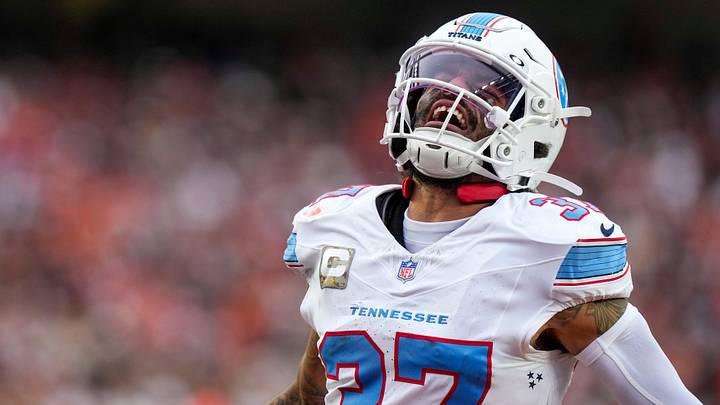
It wasn't the splashiest move made at the NFL trade deadline, but the Buffalo Bills' trade for safety Amani Hooker could go down as one of the most impactful deals made this season. The veteran fills the safety need that Buffalo has been trying to fix since the end of the Micah Hyde and Jordan Poyer era.
Hooker can help limit explosive passes and produce turnovers, two areas of weakness that have limited Buffalo's defense in the past.
Still, he isn't the solution to all of the Bills' problems on defense. Buffalo didn't address its weakness at linebacker at the trade deadline, and Brandon Beane could live to regret it.
Now that the Bills are stuck with what they already have, they'll need their linebackers to step up to make the Hooker trade worth the price they paid.
Bills failed to address their glaring linebacker need at the trade deadline
After a somewhat shaky start to the year, defensive coordinator Jim Leonhard has made the improvements that the Bills hoped to see when they hired him. He has improved the pass rush, limited explosive plays, and kept the defense from losing games that Josh Allen set them up to win.
The impact that Leonhard made with the Denver Broncos has carried over to Buffalo. Unfortunately, he also seems to have brought poor linebacker play over from Denver.
Terrel Bernard, Dorian Williams, and Kaleb Elarms-Orr each serve a role in Buffalo's defense, but none of them are well-rounded enough to rely on for every down. Bernard and Williams are undersized, and Elarms-Orr has struggled heavily in coverage.
Partially thanks to those linebackers, the Bills' run defense has improved overall this season, especially in limiting explosive plays. Buffalo allowed 13 runs of 20 or more yards last season, and it has only allowed one through the first half of this season. But while the Bills are limiting breakaway runs, they're still losing in the box too often.
According to SumerSports, the Bills rank 28th in run defense success rate this season. They're allowing successful runs on almost half of opponents' attempts. They're also losing in the red zone, allowing the fifth-most yards per carry in that area.
Both stats are indicators of subpar linebacker play. The safeties are serving their roles as the last line of defense, but the linebackers haven't been able to shed blocks and fill gaps at a high level so far.
Bills chose the lesser of two evils at the trade deadline
With limited cap space and multiple areas of need, the Bills weren't able to address all of their issues at the trade deadline. They chose what they saw as the more pressing problem, adding a Pro Bowl-caliber safety to a secondary that desperately needed one.
In doing so, they rejected the linebacker upgrades that they could have made. There weren't many starting-caliber linebackers publicly known to be on the trade market, but the Los Angeles Chargers did send Daiyan Henley to the Denver Broncos in exchange for a 2027 fourth-round pick and a 2028 fifth-round pick.
Assuming that the Chargers would have given the Bills a discount for being outside of their division, Beane could have elected to add Henley to his roster.
Instead, the Bills are forced to press on with what they already have at linebacker.
 Add us as a preferred source on Google