

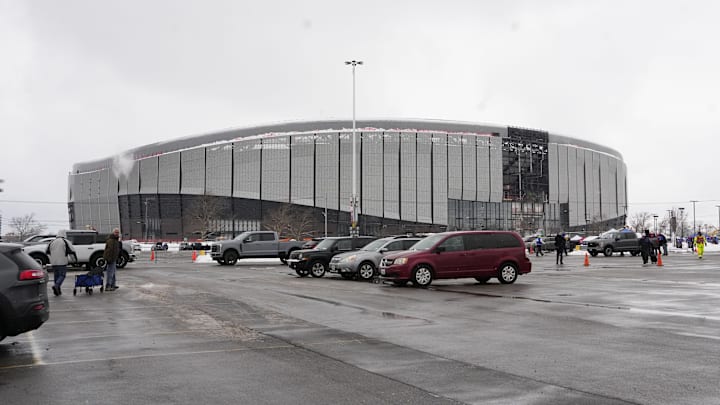
As the Buffalo Bills transition across the street to the new Highmark Stadium, they will also change the playing surface. Since the old stadium opened in 1973, the team has played on artificial turf, but those days are in the rearview mirror.
The new stadium ushers in a new era of playing fields, with natural Kentucky bluegrass replacing the old artificial turf. It also introduces a revolutionary idea: gaining a competitive advantage over other NFL clubs.
This change could give the team a key advantage, but they will also have to adjust to playing on this surface at home for the first time in their careers.
Could the Bills thrive from new stadium adjustment?
Why did Buffalo go from turf to grass?
The Bills' decision to move from turf to grass was based on common sense and NFL data indicating a new playing surface was needed for the new stadium. For starters, turf may be more durable and easier to maintain, but NFL players have sustained non-contact lower-knee injuries because turf is slippery and rough.
The grass field the Bills will use is heated and kept at 60 degrees, even in the brutal winters of Western New York. That should lead to cleaner games later in the regular season and postseason.
While the new Bills stadium may still be interested in hosting concerts and other major events, the transition to grass makes it truly a football-first stadium for fans. Also, 92% of NFL players prefer real grass, as do soccer players.
The Bills may want to host a soccer match in the future, for a Men's or Women's World Cup.
Do grass or turf fields cause more injuries?
Common sense and evidence indicate that turf fields can increase the incidence of non-contact injuries and also cause natural injuries. The evidence regarding grass fields suggests that they may reduce non-contact injuries, but they do not guarantee the prevention of contact injuries.
Also, the President of the NFL players' association, JC Tretter, has been advocating for all 30 NFL stadiums to convert to natural grass to improve the product and make it safer. While that hasn't happened yet, the Bills responded to the call and have complied for the 2026 NFL season.
Should teams be able to pick which kind of field they prefer?
Absolutely, teams should pick whichever they prefer. The NFLPA may mandate this rule, but it was long overdue for teams to have a say in the type of playing surface they choose.
The problem, though, is that some teams still want turf over grass. The estimate is that they may adopt what the Green Bay Packers and Philadelphia Eagles use, installing a hybrid field with both turf and grass.
The bottom line is that this rule is a step in the right direction, encouraging teams to prioritize fewer non-contact injuries over hosting concerts and events. But those events are money-makers for the stadium as well.
Back in the 1970s and 1980s
In the good old days of real football and massive hits to QBs without repercussions, part of this reasoning was that most fields used natural grass rather than turf. The grass field allowed players to play football without worrying about severe non-contact injuries that could end their season.
At the turn of the 1980s, players wanted to stay on grass, but the NFL wanted to make money, so it decided to switch more fields to artificial turf. This meant that, over time, the hard-hitting football wore down, and more safety protocols were implemented due to turf-related non-contact injuries.
The idea, though, had its positives: the players were becoming bigger and faster and would tear up these old, worn-out grass surfaces. Plus, the league wanted to showcase more speed and athleticism, and, as fans know, speed is better displayed on artificial turf.
Today
Fast-forward to today, and nearly half of NFL stadiums still use artificial turf. While it has led to better athleticism and more speed from these athletes, it's also caused some of the non-contact injuries we see that have ended players' careers.
Even though most NFL players prefer grass over turf, the NFL has half its teams playing on both. Despite the theory that grass may lead to more wins, the win percentage of teams playing on turf vs. grass is actually about 50%.
The thought here is, if NFL Commissioner Roger Goodell and the NFL want safer playing surfaces, could this lead to a modern-day era of the 1970s and 80s: real football era? Fans today would like to answer with a resounding "yes," but only time will tell.
 Add us as a preferred source on Google